Showing posts with label Dance. Show all posts

POPS: More Opportunities to Refine Arts Education During Summertime


Summer break is when many educators think about, collaborate, improve, and refine their plans for the upcoming school year. Professional Outreach Programs in the Schools (POPS) can provide the needed resources to integrate the arts into those plans. 

POPS is managed by the Utah State Board of Education and sponsored by the Utah State Legislature. The program brings arts education and professional artists to educators and schools for free or subsidized costs. Read on to discover different and accessible ways to integrate dance and visual arts into your classroom, all available through POPS.

Ballet West

Ballet West has a variety of virtual learning opportunities available on its website for educators and students. The student in-theater presentation of Snow White, along with Getting the Pointe Workshops and study guides, helps viewers connect to the arts through an engaging and entertaining presentation of this classic fairy tale. 

The virtual presentation of the Ballet West for Children lecture demonstration Sleeping Beauty provides a broad scope of information about ballet and dance as art forms and professions. This demonstration also provides access to a study guide as well as hands-on Getting the Pointe workshops to enhance the experience.

I CAN DO classes are available for students and teachers who want to get up and move. These short lessons cover a wide variety of core curriculum concepts and are appropriate for multi-grade levels and ages. Happily, these classes can be viewed online multiple times to help improve skills and comprehension.

All of these experiences address the Utah State Core Curriculum, life skills development, and career and college readiness concepts. For more information about all of Ballet West’s virtual educational offerings, please visit https://balletwest.org/outreach.


Nora Eccles Harrison Museum of Art

Using art from the museum’s collection, Nora Eccles Harrison Museum of Art’s educators have created grade-specific online learning modules that address different themes. The modules prompt students to create their own artwork. Each workshop fulfills different core learning standards, including science, fine arts, and social studies. 

The museum’s Junior Curators experience is now offered online and will soon be joined by an online Elementary Curators experience. As participants go behind the scenes at NEHMA, curators will explore different ways to think about art and learn about art collection, displaying art, and creating exhibitions. These programs are well adapted to both home and classroom learning and can be undertaken individually or as class projects.  

Alongside the new digital tours of five exhibitions at NEHMA, which are available to everyone on the website, there is a High School Digital Tour Activity, which guides students through the galleries, including prompts for further consideration of the artworks on display and response activities that can be done at home or in a classroom. 
 
Repertory Dance Theatre 

Repertory Dance Theatre has an expanded blog on its website that includes lesson plans, career mentorship, videos of works from RDT's historical and contemporary library, and also hour-long performances of VOYAGE, RDT's in-school assembly, and MOSAIC, a tapestry of music and movement from around the world. Teachers of grades K-12 have the opportunity to use the movement lesson plans, which include core subjects, such as science, math, and language arts. Also included are folk dances, technique warm-ups, ballroom, jazz, hip hop, ballet and movement exercises from dance pioneers Ito, Graham, Limon, Humphrey, and Cunningham. 

RDT dancers and artistic staff have been working to contribute to the site daily and will continue to do so to build a large online education resource. During this challenging time, RDT is prioritizing its efforts to offer teachers the full measure of opportunities in providing dance education to their students.  


Tanner Dance

Tanner Dance at the University of Utah is providing online resources for educators and families this summer. Students, teachers, and families can take a sampling of virtual classes from the Arts-in-Education program on Tanner Dance’s website. Examples of these lessons include rhythm patterns, rocks and shapes, and negative space. A rotating library of past Tanner Dance performances can also be viewed from home.  

This summer, Tanner Dance is offering weekly live Zoom classes for toddlers, children, tweens, teens, and adults, as well as Flipgrid camps that include dance technique, improvisation, composition, visual art, and drumming for dancers in grades 1-12. Registration for camps and classes is available at https://tannerdance.utah.edu/programs/summer-session/.

When school resumes, Tanner Dance can provide virtual dance lessons for K-6 classrooms through YouTube or through live distance-learning sessions. For more information, please contact Rachel Kimball at rachel.kimball@utah.edu.

More information on POPS resources can be found in this earlier post.

Laura Giles is a lover of all things art, a first-grade teacher in Alpine School District, a writer for The Daily Herald newspaper, an Arts Leadership Academy graduate and has earned the Arts Integration Endorsement from Brigham Young University. She can be reached at LauraCGiles@gmail.com


Online Resources for Arts Learning:
Read More »

Non-tech Arts Activities at Home: Dance

Tired of tech? Sick of screens?
Try these non-tech DANCE activities! 
Non-tech arts activities provided by professional educators in dance, drama, music, and visual arts on the BYU ARTS Partnership Leadership Team. 

Do I really have to move my body? 
Why can’t I just sit and watch movies or play video games?
Why can’t I just read all day? 

Most of us have been at home constantly over the past weeks. Have you, your students, or your children been asking these questions lately? Here’s some information to support moving your body, especially during a time when sitting and screen time have increased.

Dr. Joan Vernikos, the former director of NASA’s Life Sciences Division, is the author of “Sitting Kills, Moving Heals: How Simple Everyday Movement Will Prevent Pain, Illness, and Early Death -- and Exercise Alone Won’t”. She states: “The human body is designed to be much more physically active than most of us are today. Yet we have an understandable craving for comfort, and [new] inventions provide comfort to a degree previously unknown to even the wealthiest humans. As with any craving, our technological addiction leads us on a never-ending spiral of wanting more and more gadgets to do things for us that our ancestors used to do for themselves.”

She describes the health problems that result from these tech cravings: obesity, diabetes, heart disease, osteoporosis, muscle degeneration, arthritis, balance and coordination issues, poor sleep, and a lack of energy. Even in a highly developed world, consequences like these that used to be associated with aging are now appearing much earlier, even in children.

Despite the many advancements designed to make our lives easier and longer, these same conveniences can make our bodies age more quickly! Sitting isn’t a new invention, but it is a fast track to aging according to Dr. James A. Levine, co-director of the Mayo Clinic/Arizona State University Obesity Solutions Initiative and the inventor of the treadmill desk. His research provides evidence on how sedentary lifestyles directly connect to sluggish brain function and wandering thoughts.

Dr. Levine writes, “The true cost of sitting disease is even greater than the litany of medical illnesses. Most at stake is your sense of well-being. We all have a capacity for happiness. Sitting somehow suppresses it. Sitting is more dangerous than smoking, kills more people than HIV and is more treacherous than parachuting. We are sitting ourselves to death. How did no one notice?”

Dr. Levine wants us to despise our chairs, claiming that sitting is a sickness. We agree. However, chairs can make great dance partners. Movement is life! If we aren’t moving, we aren’t living. So don’t pull up a chair, pull out a chair! Or a broom, or a vacuum, or a blanket, or a scarf. (Really anything you don’t have to keep 6 feet away from is a good option for a dance partner--including family members, especially children.) Move your body and live a long life!

Okay, you get it. On your feet! Stand up, grab a family member and try out some of these fun non-tech dance activities.

Non-tech Dance Activities 

Chair Dance: Pull out a chair and explore all the ways you can safely dance around, over, through, and under your chair. How many ways can you connect different body parts or find balancing shapes with the chair? Partner with a friend or family member and take turns teaching each other what you’ve discovered to create a chair dance. Take your chair to a neighbor’s front yard and perform for them!

Imaginary Dance: Children can write about and illustrate a dance they imagine creating if they had unlimited time, money, and resources. They can draw a picture of the dance and describe how it would be performed, the costumes, what the sound accompaniment sounds like, who would be in the dance, and why this dance is important to them.

Handwashing Dance Choreography: Use handwashing as inspiration for a choreography project! Invite children to explore all the creative ways they can wash their hands. How fast or slow can they scrub? What if the sink was on the ceiling or on the wall? What if they had to wash their hands backwards or between their legs?

Movement Scientist Log: Have children write down movements that they see each day. Depending on their age, children can draw pictures of the movements or record information about the movements. Their pictures or writing can describe the object or person moving, the setting, the energy qualities (how the dance makes them feel), and the motion, timing, spatial elements, or body parts involved. Children can then create a dance phrase from the movement they captured.

Family Dance History: Invite students to interview family members about their dance backgrounds and interests. What dances do they know? What does dance mean to them? What is their favorite dance and why? Children can record the responses they get and document their own answers as well. Children can also create their own dance based on the responses of their family members, and share the dance with that person the next time they are together.

Dancing Journal: Play a new song each day and invite children to dance along. Afterward, children can draw or write about what they explored and how they felt. They can dance along to a recording, make the movement up themselves, or dance with their family.

Texture Dance: Children, family members, or students can choose four objects with different textures in their environment. List three adjectives to describe the texture of each object. Then, choose three axial or locomotor movements. Together, explore four variations of each movement by using the adjectives for each of the four objects. Each person can use their favorite movement variations to construct a dance to share.

Obstacle Course: Have children use objects and materials found in the home to set up an obstacle course. After completing the obstacle course, layer challenges such as going backwards, traveling through holding the same twisted physical shape from start to finish, or completing the task without their feet. See how many challenges you can think of!

Name Choreography: Students can create movement for each letter of their name by using a different body part to draw that letter in the air. "Draw a “J” with your leg, an “o” with your head, an “h” with your elbow, and an “n” with your knee. Choose a partner, and swap drawing each other’s names!

Found Sounds Dance: Children can find or create different sounds around the house and explore the movement they feel inspired to make when they hear those sounds. Kitchen pots and pans, toys, toothbrushes, plastic trash, or even their own bodies can all be used to create singular sounds that inspire unique movements.

Muscle Madness: Identify six to eight different muscles of the body to explore through flexing and creative movement. Spend about 30 seconds with each, exploring as many movement ideas as possible. Identify which movements require the most effort and would help strengthen muscles the most. Consider learning the scientific names for the muscles you explored!

Breathing Through Space: With or without music, use your breath to direct your movement. When you inhale, you can grow big, and when you exhale you can shrink your body. Or, perhaps your inhales uplift you to the tips of your toes and your exhales push you into the floor. See how you can move when inhaling or exhaling in quick, small spurts. Can your breathing make you travel to a new place in the room?

Moving Elements: Pick one of these main elements: earth, air, fire, or water. Make a list of the adjectives, verbs and adverbs that describe the element. Using the list, explore how your body can move like the chosen element. Consider choreographing a dance about the element to perform for your family, or to record and share with others! What props could you use? How does dancing like each element make you feel?

Written and compiled by Chris Roberts (Provo City School District Arts Instructional Coach), Heather Francis (Dance Educator, BYU ARTS Partnership Staff), and Rachel Marie Kimball (Dance Educator, GAINS Coach, Nebo School District). Find more resources at AdvancingArtsLeadership.com 
Read More »

Utah Women’s History to Be Celebrated in 2020

February 7, 2020

Better Days 2020, a nonprofit organization dedicated to popularizing Utah women’s history through art, education, and legislation, has reason to celebrate this year—as do all of us. This year, Better Days 2020 will celebrate the 150th anniversary of Utah women casting their first ballots, the first American women to vote under an equal suffrage law. It is also the 100th anniversary of the 19th Amendment, which gave equal voting rights to women; and the 55th anniversary of the Voting Rights Act, which protected voting rights of racial minorities.

Arts-Based Initiatives 

There will be numerous arts event to celebrate these landmarks happening throughout the state during 2020. These events, both educational and uplifting, integrate the arts with history and will be engaging to educators and students alike.

The Utah Division of Arts and Museum’s Traveling Exhibit Program will feature Utah artist Brooke Smart’s 50 original illustrations of Utah women’s rights advocates. Check out the full schedule. The exhibit’s last destination will be the Springville Museum of Art and will be on display there from May to August.

The “Utah Women Working for the Vote and Beyond” exhibit features reproductions of Smart’s 50 illustrations paired with historic artifacts. This will be on display on the fourth floor of the Utah State Capitol Building from January¬ to December 2020.

Better Days 2020 has also released “Utah Women Making History Trading Cards” and a book titled Champions of Change: 25 Women Who Made History, both of which feature Smart’s illustrations.

Women’s Rights Memorials

A statue of Dr. Martha Hughes Cannon—Utah’s first female state senator—is to be installed in National Statuary Hall in August 2020. Check out this website to learn more about the statue and Hughes Cannon herself.

There will be a new Women’s History Memorial installed at Council Hall in Salt Lake City. The sculpture was designed by Utah artists Kelsey Harrison and Jason Manley and will memorialize the first woman to vote and honor the millions of women who have voted in Utah and across the nation since that important day.

Resources for Educators 

There are other ways to get involved during 2020. Schools can become Utah HERitage Schools and receive free swag and a toolkit of materials to learn and celebrate.

Better Days 2020 would love to hear from schools where teachers and students develop their own arts projects to commemorate and celebrate this special year. Students can attend the 150th Anniversary “First to Vote” Celebration at the Utah State Capitol on February 12, which coincides with another Utah State Capital event, Arts Day on the Hill.

Educators can find free downloadable resources at www.utahwomenshistory.org to help educate students and participate in the celebration. These resources include


For updated information and more ideas, follow the organization on social media @betterdays2020.

Laura Giles is a lover of all things art, a first grade teacher in Alpine School District, a writer for The Daily Herald newspaper, and an Arts Leadership Academy graduate. She has earned the Arts Integration Endorsement from Brigham Young University. She can be reached at LauraCGiles@gmail.com.
Read More »

Finding the Best Arts Specialist

October 18, 2019

Who a principal hires to teach the arts at a school can impact student learning and school culture. At the elementary level, an arts teacher serves every student in the school in one art form and provides leadership across all the art forms. At the secondary level, there is often only one teacher in each art form at the school, which means the entire school program is dependent on the skills, ability, and professional commitment of that individual. At both levels, the teacher plays a critical role to build a quality program over time.

To optimize the impact of arts programs, the BYU ARTS Partnership has provided tools for administrators to find the most effective arts educators for their schools. Over the past two years, the Partnership has put together resources for elementary and secondary school administrators with an abundance of information about how to build an arts-rich school, including indicators of a quality arts specialist and how to recruit and hire one.

To create the resources, leaders in the BYU ARTS Partnership worked with the presidents of the Utah Art Education Association, Utah Music Educators Association, Utah Dance Education Organization, and Utah Advisory Council of Theatre Teachers. Each agreed that administrators would like to find the best candidates for their schools because choosing the right teacher has such a strong impact on the school culture and the students, according to Heather Francis, BYU ARTS Partnership research coordinator.

Steps to finding that quality instructor include recruiting from the best pool of candidates; considering licenses, degrees, certifications and accreditation; investigating pedagogical approaches and dispositions; observing teaching; and asking the right questions.

The group determined administrators should know certain questions for each specific art form that can be asked as part of the interview process. The resources include sample interview questions and sample strategies for getting to know the candidates. For example, a strong question for a music educator might be, “What types of ensembles have you directed?” and “What styles of music are you most comfortable directing?”

Administrators might not be certain about which qualifications to look for in a prospective arts teacher. An example, according to Francis, is an administrator who may not know which items on a dancer’s resume prepared the candidate for teaching in the classroom, choreography, or performance opportunities. The resources recommend principals look to see if the candidate is part of their professional dance education organization and if they have previously taught students to choreograph their own work.

Some questions can help an administrator make a decision about an arts specialist, regardless of the art form. What exactly does it mean to be educationally minded in the arts? What kinds of qualifications does the specialist have? What kinds of impact has the candidate had on a school in the past?

Principals may contact professional arts education organizations to inquire about available arts educators. These organizations are also a support and resource as they provide professional development for arts teachers after they are hired.

The process to finding a quality arts specialist can be tricky, but help is here, in the form of the “Building an Arts-Rich School” online resource materials.

* There will be a session at the Learning Edge Administrator's Conference on November 12th about "Building an Arts Rich School." Please visit https://education.byu.edu/cites/learning-edge-2019 to register.


Laura Giles is a lover of all things art, a first-grade teacher in Alpine School District, a writer for the Daily Herald newspaper, an Arts Leadership Academy graduate, and has earned the Arts Integration Endorsement from Brigham Young University. She can be reached at LauraCGiles@gmail.com.
Read More »

The 150th Anniversary of the Golden Spike Unites History and the Arts in Elementary Classrooms

On May 10, 2019 Utahans will celebrate the 150-year anniversary of the Golden Spike Ceremony.

The first transcontinental railroad connected the West Coast, rich in gold and other precious metals, to the industrial Northeast and spurred western expansion by cutting the travel time between the West and East Coasts from six months to six days.

The Union Pacific and Central Pacific railroads met at Utah’s Promontory Summit in 1869, uniting the two main tracks into a single railroad line—the Transcontinental Railroad. To mark the meeting, Leland Stanford, cofounder of the Central Pacific Railroad, added a 17.6-karat gold spike as the last piece of the railroad.

To celebrate the 150-year anniversary of the golden spike, BYU ARTS Partnership created six lessons for third to sixth graders which use art, music, dance, and theater to teach students about the Transcontinental Railroad.


The Railroad Rhythms  by Jennifer Purdy

(click here to view the lesson plan)

Students explore sound layering by performing railroad sounds to a steady beat and creating a railroad soundscape. Teachers read Iron Horses by Verla Kay while students use simple classroom instruments, found sounds, body percussion, tapping, or vocalizations to follow the book’s rhythm. Dividing the class into groups, students practice layering rhythms as the class become an orchestral chorus of whistles, wheels, steam, and motors. Using musical terms such as accelerando, piano, and forte, teachers guide their students in their transcontinental railroad orchestra. Students also find the rhythm in language by using words related to the railroad to count syllables.

New Newsies: Uncovering the Stories Buried beneath the Golden Spike  by David Dynak


This lesson helps develop research skills as students inspect primary sources and perform a theatrical piece on newsies. The newsies strike of 1899 is a perfect example of how the railroad changed American society; New York City newsies united to strike after Joseph Pulitzer and William Randolph Hearst raised newspaper prices. In this activity, students read primary and secondary sources to uncover the full story behind the building of the Transcontinental Railroad. After researching, students perform in a play which dramatizes the sometimes-unknown experiences of many groups affected by the Transcontinental Railroad. Diving into roles as newsies allows students to perform their new-found knowledge on the building of the railroad.


Real and Ideal: A Closer Look at Westward Expansion by Rachel Jackson Gonthier


Students learn to identify the differences between romanticized ideals and reality by comparing romantic paintings to photographs. Nineteenth century paintings of the American West romanticize the landscape and the ideals tied to westward expansion. Photographs from the same time period provide a realistic portrayal of the landscape to contrast these romanticized ideals. This allows students to analyze how pictures tell stories and create certain perceptions. Students are invited to reflect on how they romanticize their own lives. Students also practice identifying misleading images by taking photographs of the same object from different angles. When finished, students present their pictures to the class and explain how a different perspective can change the viewer’s perception.


Iron Horses  by Miriam Bowen


Students read the book Iron Horses by Verla Kay to explore the eight types of locomotor body movements: walking, running, hopping, skipping, jumping, galloping, leaping, and sliding. The class is divided into different groups to perform the locomotor movements. By practicing these movements, students bring the written word to life and make connections between people walking, horses galloping, and the Transcontinental Railroad chugging.

The Great American Bison  by Brenda Beyal


This lesson utilizes acting and art to show students how history is a complex narrative with multiple perspectives. The lesson showcases the advantages and disadvantages of building a Transcontinental Railroad and how the railroad negatively impacted Native Americans and the great American bison. The railroad cut through Native American hunting grounds and diminished the bison population, their main source of food. Native Americans remained resourceful and used every part of the bison they killed. During the lesson, students follow their example by being resourceful. Students create an art piece with recyclable materials such as plastic bottles, old papers, and cereal boxes. In another activity, students learn there are many perspectives within one story and how to implement thought tracking through role playing exercises.


Railroad Meter  by Emily Soderborg


This lesson connects the Transcontinental Railroad to music. When constructing the railroad, builders used musical beats to move the railroad tracks together. Listening to the song “I’ve Been Working on the Railroad,” students tap the beat to gain a sense for meter and identify two-meter, three-meter, four-meter, and mixed-meter rhythms within different songs. Students can play instruments alongside the musical recordings to understand meter. For the third activity, the teacher plays several songs sung by groups who worked on the railroad or who were impacted by the railroad. Students divide into groups to research and perform each song. The songs come from an array of peoples and cultures including African American, Irish, Chinese, Latter-day Saint, and Shoshone. At the end of the lesson, students prepare and present a brief presentation on the history of their song to the class.

BYU ARTS Partnership lessons unite historical events with the arts to give students a multilayered understanding of the past. These lessons encourage students to analyze history and uncover facts excluded in traditional historical texts.

Students learn to question history and become historical detectives. These lessons also explore history as a complex narrative; they cover how valuable resources benefitted American expansion while also teaching the high cost of this expansion for Native Americans as well as the detrimental impact on certain groups of immigrants. As students delve into history, they learn how the past shapes the present and their own identity as Americans.

Look for these lesson titles at https://education.byu.edu/arts/lessons/. Special thanks to Brenda Beyal, David Dynak, Jennifer Purdy, Emily Soderborg, Miriam Bowen, and Rachel Jackson Gonthier, who developed these lessons.

Writer: Emma Smith
Contact: Cindy Glad (801) 422-1922
Read More »

Moving Through Africa: A BTSALP Dance Specialist's Experience - Rachel Marie Kimball

Introduction 

From Ghana to Rwanda, and finally Uganda, I moved and danced with countless souls to the rhythms of cultural heritage. Young and old—male and female—embraced the gift of life in these mortal bodies through dancing with me . . . and nothing could stop us from smiling. The movement of Africa shows that dance can be much more than an educational tool or an outlet for the gifted or troubled—it is a way of life.


Overview 

While in Africa, I did the following:

     - Worked closely and trained with four dance troupes

     - Spent quality time teaching dance-integrated and dance-for-dance-sake lessons
        in five primary and secondary schools

     - Collaborated with faculty members at four schools about the importance of
        dance and movement in education

     - Offered a half-day training on dance integration for the entire faculty at
        Nyanza Peace Academy in Nyanza, Rwanda

     - Completed a weeklong project with the dance troupe at Nyanza Peace
        Academy, complete with an informance about peace and conflict
        resolution, presented to the student body, faculty, and several family
        members in the area

     - Collected contact information from a total of 35 educators in Ghana,
        Rwanda, and Uganda in order to continue collaboration via the internet

From this small-scale overview, the most meaningful experiences are those when I connected on a deep level with individuals. Below are a couple examples of the people I was blessed to connect with:

Jonathan Balyejjusa and Save the Youth Troupe 

Jonathan Balyejjusa (pictured on the far right in the photo on page one) is a man of wisdom, strength, and charity. He is the founder and director of Save the Youth music and dance troupe in Lugazi, Uganda. Working with over 30 youth each year, he strives to empower the community through the study and performance of cultural heritage in the arts. The troupe was formed over 10 years ago and has influenced countless youth in the area. Jonathan is a living example of what it means to rise above challenges as he directs the troupe with a disabled leg. In addition to being a gifted instructor of music and dance, he is a teacher of life skills, a father figure to all youth, and a friend to everyone. As I worked with the troupe, I witnessed how Jonathan’s work offers them the skills and confidence to seek higher education and employment. They don’t just dance and sing for fun; they do it to truly live.

A Friend at the Fence 

While teaching at Christ the King Primary School in Mukono, Uganda, I noticed several small children huddled on the other side of the fence, watching us. This sentence is ambiguous because of the order. I suggest: They weren’t wearing the school uniform, and appeared to either come from families that couldn’t support their education or were too young to attend school. As I was completing my lesson, I noticed that the children had entered the school property and were sitting on a step to one of the classrooms nearby. They were happily dancing along to the music with us. Once I finished the lesson, I sat next to one of the little boys. I saw that he had a stick in his hand. I looked around me and found a few more sticks lying on the ground, so I picked them up and showed them to the boy. We spent the next several minutes in our own little world creating interesting shapes and arrangements with the sticks. We couldn’t speak the same language, but we took turns making changes to the sticks and celebrating the contributions of one another through smiles. I never learned his name, but I definitely felt his vibrant soul. I hope he continues to return to that fence. Whether he gets to sit in one of those desks and wear one of those uniforms or not, I hope he never loses his sense of creativity and desire to learn.


Special thanks to Families Mentoring Families, Global Education Allies, and Nebo School District for making this all possible.
Read More »

BYU Arts Bridge Program Connects Students and Teachers Through Arts Integration

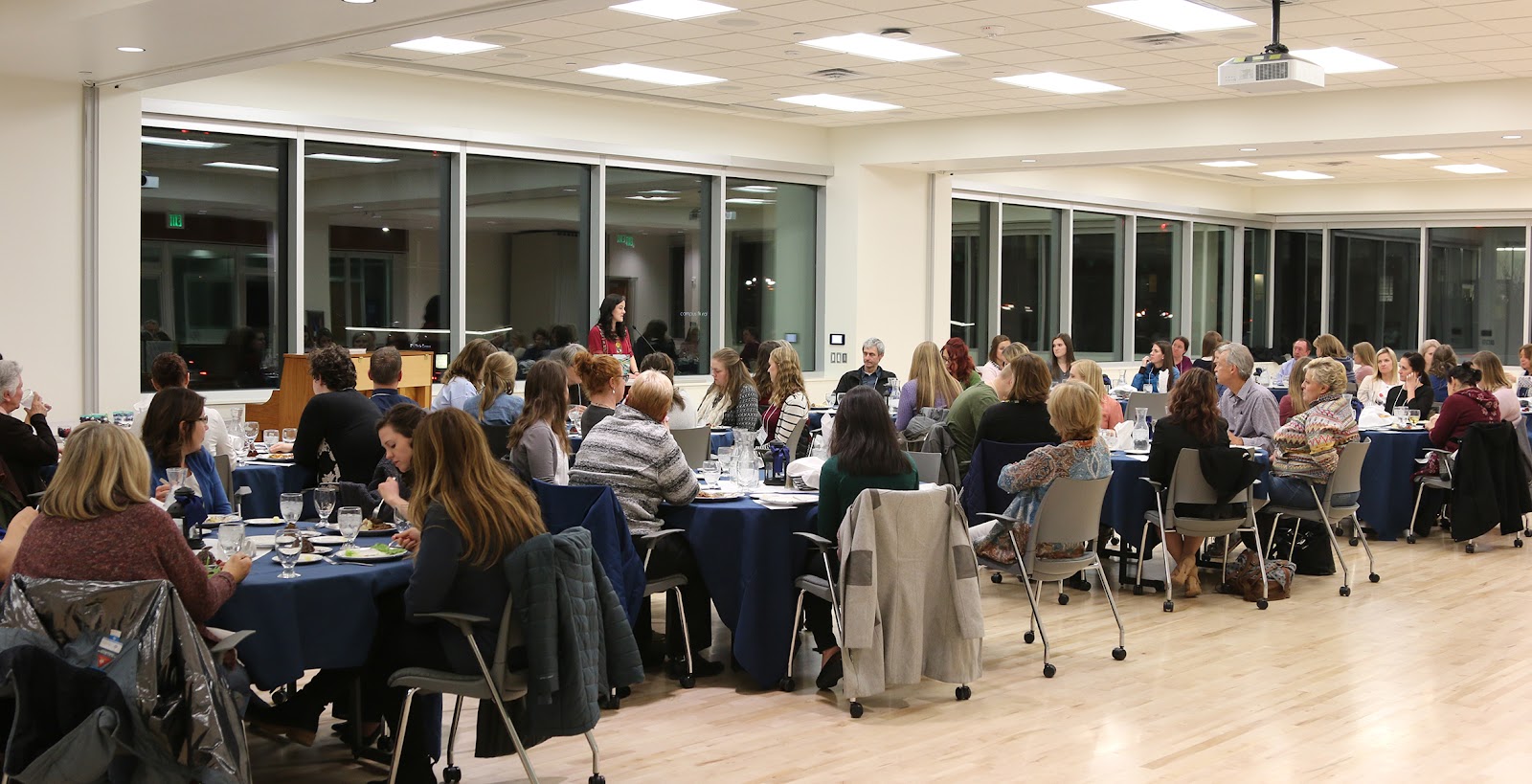
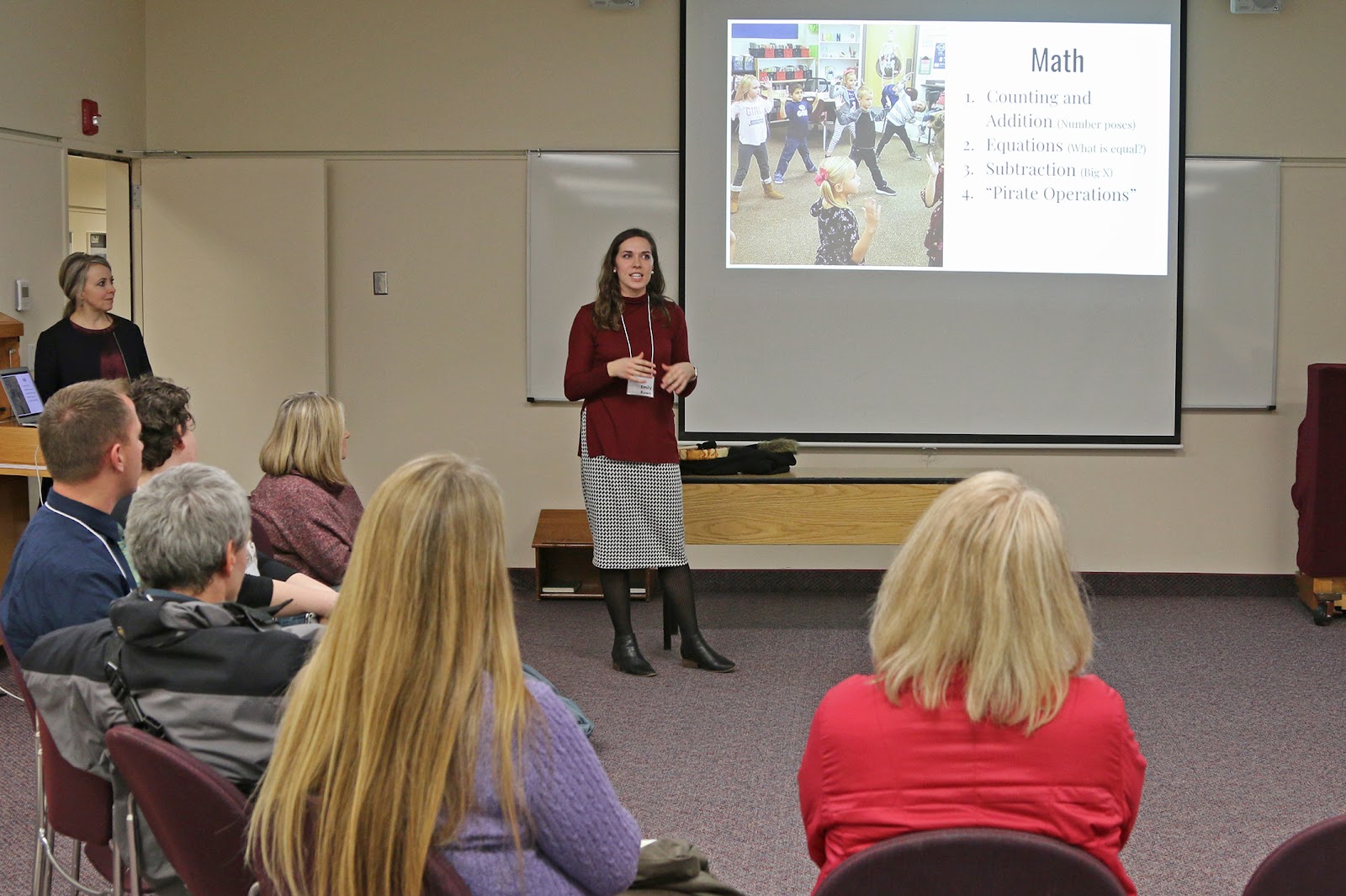
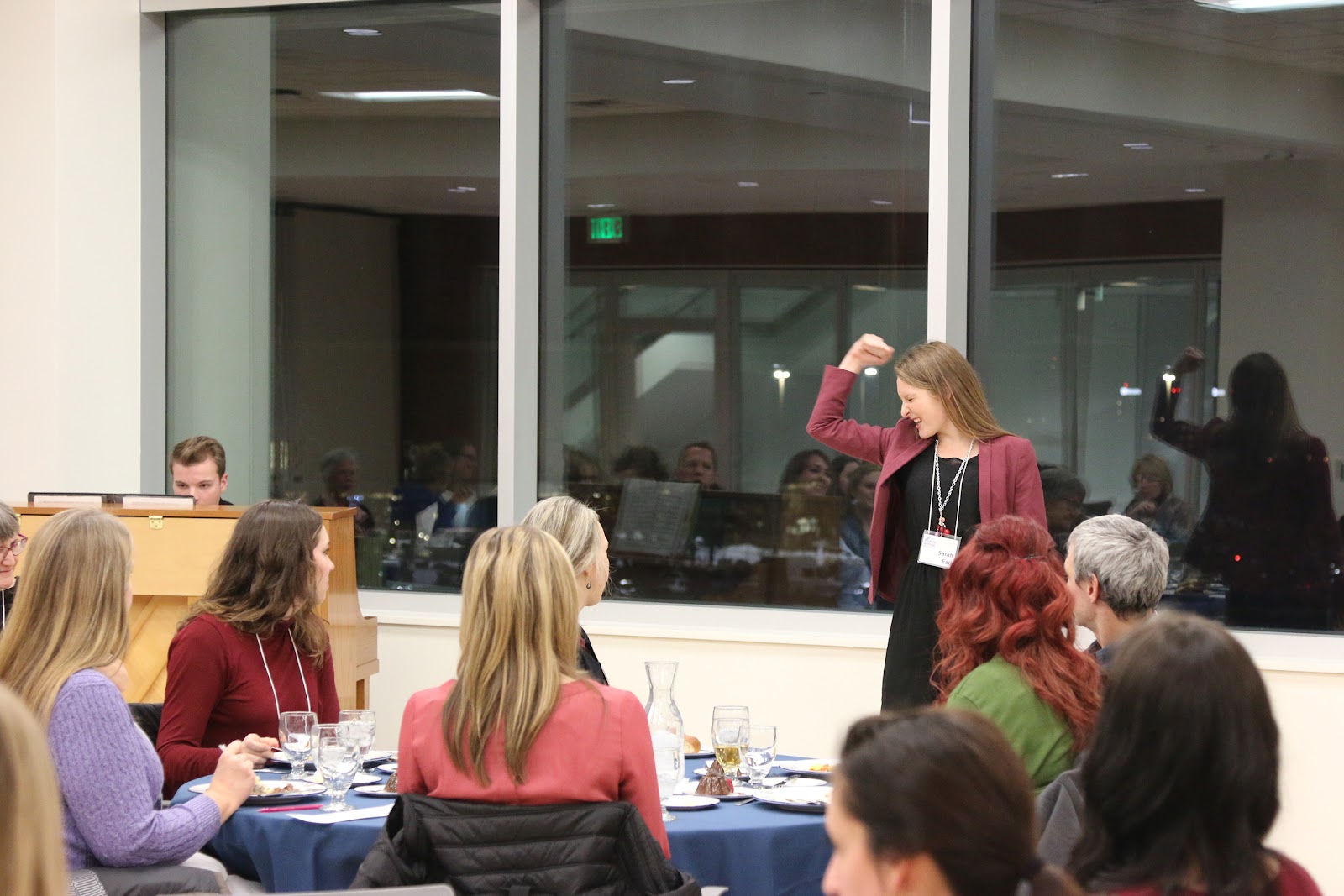
The BYU Arts Bridge Program officially concluded a successful season with a large celebration on Thursday, January 10. Arts Bridge, housed within the BYU ARTS Partnership, is a program which serves both BYU students from various artistic disciplines— including music, drama, visual art, and dance— and public school classroom teachers, allowing them to work together to develop their artistic and teaching skills through arts instruction and arts integration in local public schools. For the duration of the fall 2018 semester, 25 students called Arts Bridge Scholars were engaged in this teaching process, working with mentors in their disciplines as well as public school classroom teachers to integrate their art forms with traditional academic subjects. To conclude their efforts and celebrate their accomplishments, these students and classroom teachers met together to present what they had learned and enjoy an evening of enriching collaboration and artistic expression.


“I felt so grateful to be a part of this program as I listened to classroom teachers and BYU Arts Bridge Scholars express immense gratification for being able to explore new teaching skills, build new relationships, share in meaningful artistic experiences, and witness new pathways to student success in the classroom through the implementation of arts instruction,” said Heather Francis, director of the Arts Bridge Program.

As the scholars gave presentations together with the classroom teachers who have been their partners, the benefits of this collaborative project were clear to all involved. Many classroom teachers expressed their gratitude to the scholars for teaching them strategies for integrating the arts into their classrooms. The scholars, in turn, also expressed their appreciation for having the chance to learn classroom management and other important teaching skills from seasoned professionals in the “real world” of public school teaching.

“The program helped me prepare for pre-student teaching and get over the jitters of teaching in a real classroom,” Kiersten Hopkins, an Arts Bridge Music Scholar, shared as part of her presentation. “It taught me how to collaborate with a teacher and gave me confidence in my abilities to be creative and think on the spot. I’m so thankful I had this opportunity and now feel much more excited and sure that I love teaching and want to continue on this path!”

To learn more about the Arts Bridge Program, read blogs written by the Arts Bridge Scholars detailing their experiences at our website https://education.byu.edu/arts/arts_bridge. BYU students with an interest in teaching the arts in public schools can apply to be an Arts Bridge Scholar on this webpage as well. Applications for next year’s Arts Bridge Program will begin February 4, 2019.

Written by Sarah Earl, Arts Bridge Scholar and Student Coordinator
Read More »

Filling a School With the Arts: Sage Hills Elementary


Students at Sage Hills Elementary in Saratoga Springs, Utah, are being immersed in the arts this year as they learn other subject matter. The teachers at the school are integrating the arts into the curriculum in a variety of ways, with a little help from some arts experts! 

Principal John Emett said that some very creative things are going on at the school with arts integration. “The BYU Partnership has helped us develop so well!” he said. Students and teachers are all benefitting from this collaboration.

For the past three years, the school benefitted from the expertise of a Beverley Taylor Sorenson Arts Learning Program (BTSALP) drama teacher, Melanie Skankey. Skankey is now a fifth grade teacher at the school. The influence of that expertise is still being felt.

Last month, the entire student body participated in a Specialty Celebration, which is something that the school began doing two years ago.

“We like to take a day at the end of rotations and celebrate our progress,” said Dana Moore, physical education teacher. This year, the students traveled the globe and started in the Pacific Islands and Australia.

While “visiting” these areas of the world, the students participated in a variety of arts-based activities. These included a Haka dance-off, Tinikling, creating strings of rhythm with chains of beats and a glow-in-the-dark dance party. The Haka is a ceremonial dance in Māori culture. Tinikling is a traditional Philippine folk dance.

This year, visual arts and literacy are being integrated in some of the classes. Scott Flox, artist-in-residence from the BYU Arts Partnership, has been collaborating with fifth grade teachers Teressa Paepke and Melanie Skankey to integrate the arts into their teaching.

According to Paepke, Flox has been helping the students with novel studies, mind-mapping and drawing. Recently, he has been studying “The BFG” by Roald Dahl with the kids. He has also taken them through the steps of drawing pumpkins and creating artworks, modeling the importance of basic drawing skills.

Since Flox has been working with the teachers, their instruction has changed in many ways, according to Paepke. “As teachers, we have started writing our own deep integrated lessons based on National Geographic articles, poems, speeches and other articles,” she said.

The teachers are not the only ones who are benefitting from this collaboration. “Students are learning in a new way that is more engaging to them and means more. The content is relevant to them and they make connections to it. They also remember it more and are able to recall things more often and quicker,” Paepke said.

First-graders at Sage Hills are dancing while learning. According to Emett, collaboration amongst teacher Summer Wanlass and a dance scholar, Emily Rowe, from Brigham Young University is bringing the art of dance to the students. Wanlass is participating in the Arts Bridge program. The program provides an opportunity for classroom teachers and students to have an in-depth experience in an art form.

Music Scholar Kiersten Hopkins, from Brigham Young University, is working with Melanie Skankey’s class to help them integrate music into the curriculum. The arts are flowing through the halls and classrooms of Sage Hills Elementary!

Laura Giles is a lover of all things art, a first grade teacher in Alpine School District, a writer for The Daily Herald newspaper, an Arts Leadership Academy graduate and has earned the Arts Integration Endorsement from Brigham Young University. She can be reached at
LauraCGiles@gmail.com.
Read More »

The Art of Integrating Dance: Chris Roberts


The Art of Integrating Dance: Chris Roberts

Written By Laura Giles

Chris Roberts, Arts Integration Coach for the Provo City School District, is teaching other teachers how to integrate the arts into their teaching to bring the excitement back into learning. He is doing this through the art of dance. Roberts has worked in the classroom of every teacher in the Provo City School District who has participated in the Arts Leadership Academy or earned the Arts Integration Endorsement.

Roberts has taught in elementary schools since 1978, beginning in the Nebo School District. He now works side-by-side with teachers in all elementary school grades to provide dance integration instruction, giving teachers the courage to continue using dance with their teaching long after he has moved on to another class. The children love his energy and enthusiasm, and they learn to love dance while grasping concepts more strongly in all curricular areas because of the arts integration.

Although his dance influence is strong, dance was not always such an important part of his teaching. Roberts’s youngest daughter was involved with Brigham Young University’s Creative Dance for Children program from the ages of 4 to 17. This is when a spark was ignited in Roberts. He was the designated carpool driver for her and two friends.

“Instead of sitting in the car waiting, I would go in and watch the class,” he said. “As the years progressed, I saw the creativity, problem-solving skills, cooperation skills, and self-confidence grow in my daughter.”

In 1991, Roberts and a fellow teacher wrote a grant to the Utah Arts Council (now the Utah Division of Arts and Museums) and were able to bring an artist-in-residence to their school. It was Doris Trujillo. She spent ten days at the school teaching dance to their students, and at the end of her residency she left them the book First Steps in Teaching Creative Dance to Children, by Mary Joyce.

“The next week, I took my students into the gym and did lesson one with them,” Roberts remembers. “I literally held the book in my hand and read what it said to say to students.” After that, he began to take workshops on how to teach dance to children and, eventually, he began teaching the workshops himself.

“Marilyn Berrett heard about me and observed me while I was teaching dance to my students. She began bringing BYU students to observe me,” Roberts said. Berrett, a professor of dance at BYU, got Roberts involved in UDEO (Utah Dance Education Organization) where he was elected as elementary representative and served for six years. She also got him involved in daCi (dance and the Child international,) where he was elected as member-at-large for three years, became chair-elect for three years, national chair for five years, and is now serving as national representative.

Roberts and Berrett presented in Brazil at a daCi international gathering and in Albuquerque and Long Beach at NDEO (National Dance Education Organization) conferences. “Because of many great mentors and strong women pushing me, I got more and more involved and was awarded the Governor’s Leadership in the Arts Award in 2012,” Roberts said.

One way that Roberts loves to teach through dance is by integrating the art with children’s books. “Teachers will take a book and look at the illustrations and text for inspiration for dance. It makes the book come alive for students,” he said.

He also said that science has many ways to naturally add dance to help students learn concepts. For example, fourth-grade teachers love to teach weathering and erosion through dance.

Deborah Raymond teaches a sixth grade gifted/accelerated class at Sunset View Elementary in Provo. Her students from last year actually started dancing with Roberts the year before, when they were fifth graders. According to their fifth-grade teacher, they were very awkward and self-conscious when they first started.

“When school began last year, we'd only been in session for a few days when the students started asking me if they were going to be able to continue dance class with Mr. Roberts. I didn't know what they were talking about, so I asked, and they couldn't say enough about how much they loved learning to move in such creative ways and began begging me to make sure they would be able to keep dance in the schedule,” Raymond said.

“He very generously made room for us. Chris has so much respect and kindness in his teaching style. I'm sure that is the biggest reason the students continued dancing,” she said. “At a time when students are becoming more aware and catapulting into a hyper-awareness of their bodies, Chris taught them to be comfortable and gave them tools for expression with the very part of themselves that they were most awkward with.”

Raymond said that her students looked forward to dance every week and were disappointed if it ever had to be cancelled. “Some of the students felt the benefits included helping them communicate better with their friends and family because they had learned to handle themselves in a dignified way during dance,” she said.

“Integrating the arts is important because of what it gives to many students that usually don't shine in typical educational environments,” Roberts said. “It brings joy into learning.”

Laura Giles is a lover of all things art, a first-grade teacher in Alpine School District, a writer for The Daily Herald newspaper, an Arts Leadership Academy graduate, and has earned the Arts Integration Endorsement from Brigham Young University. She can be reached at LauraCGiles@gmail.com.

Read More »